I recently witnessed two situations where people suddenly transformed themselves into “prophets” or “medical experts” just to satisfy their own egos. These stories left me reflecting deeply on what we call human “knowledge.”
The first story is about my younger cousin. Right after she was diagnosed with a goiter and was still in a state of confusion, she met an uncle—a man of high social standing and a very dignified demeanor. Without any medical examination or expertise, he bluntly proclaimed: “This condition makes it very hard to have children; you should prepare yourself for that.”
Can you imagine how a young woman feels hearing those words? It felt like a suspended sentence, sowing seeds of fear and melancholy for a long time. However, life proved to be more miraculous than his “prophecy.” Years later, that same cousin married a foreigner and returned home for Tet with a beautiful, healthy baby. The “elder’s” judgment from years ago now looks utterly ridiculous in the face of her current happiness.
The second story happened five years ago during coffee with two friends. When one shared that they suffered from sinusitis, the other immediately cut in: “Sinusitis can never be cured.” Yet, when I met that friend again last month, the friend who had suffered from sinusitis for years was now healthy and radiant. He told me that through persistent running, sea swimming, and a complete lifestyle overhaul, the condition had vanished entirely.
Looking back at these two stories, I see the embodiment of “non-expert judges.” They don’t judge because they actually know; they do it to flaunt a bit of fragmented “knowledge” to appear experienced and wise. They crave the feeling of being listened to and feared.
But that fleeting moment of “authority” unintentionally inflicts wounds, pain, and lingering anxiety on the listener. Reality proved both of those “prophets” completely wrong. Half-baked knowledge is sometimes more dangerous than ignorance.
Ahaalife simply wants to share this: Why do we try so hard to prove our “knowledge” when the price might be someone else’s tears and worry? Life is already pressured enough.
Let’s slow down for a beat. Instead of judging with negative assertions, offer a word of encouragement. Instead of saying “It’s too difficult,” try saying: “Medicine has advanced so much; stay optimistic and persistent with your treatment, everything will be fine.” Or simply: “I believe in your resilience, just take it one step at a time.”
That is when you truly contribute a small joy and a ray of hope to this life, rather than a burden on someone’s soul.

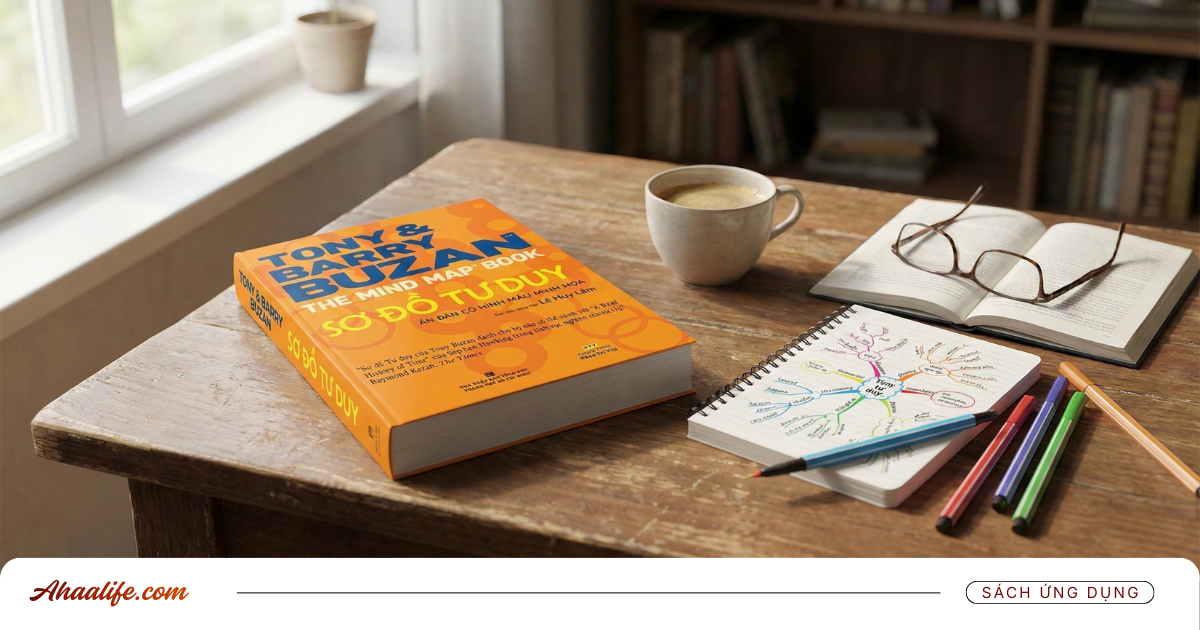
“Mind Map” by Tony Buzan. Redrawing Life on a Single Page
In this life, milestones aren’t measured by calendars. They are marked by those “spark” moments when your brain suddenly clicks and shifts your entire orbit.