I remember those mornings five years ago vividly. The clock strikes 5 AM, the alarm blares, and instantly, an “emergency meeting” convenes in my head. A tiny, nagging voice whispers: “Just 15 more minutes. You stayed up late for that report; your body needs recovery.” Or, when standing before a risky yet high-potential investment, it roars: “Remember that 2018 crash? Don’t be greedy; safety is everything.”
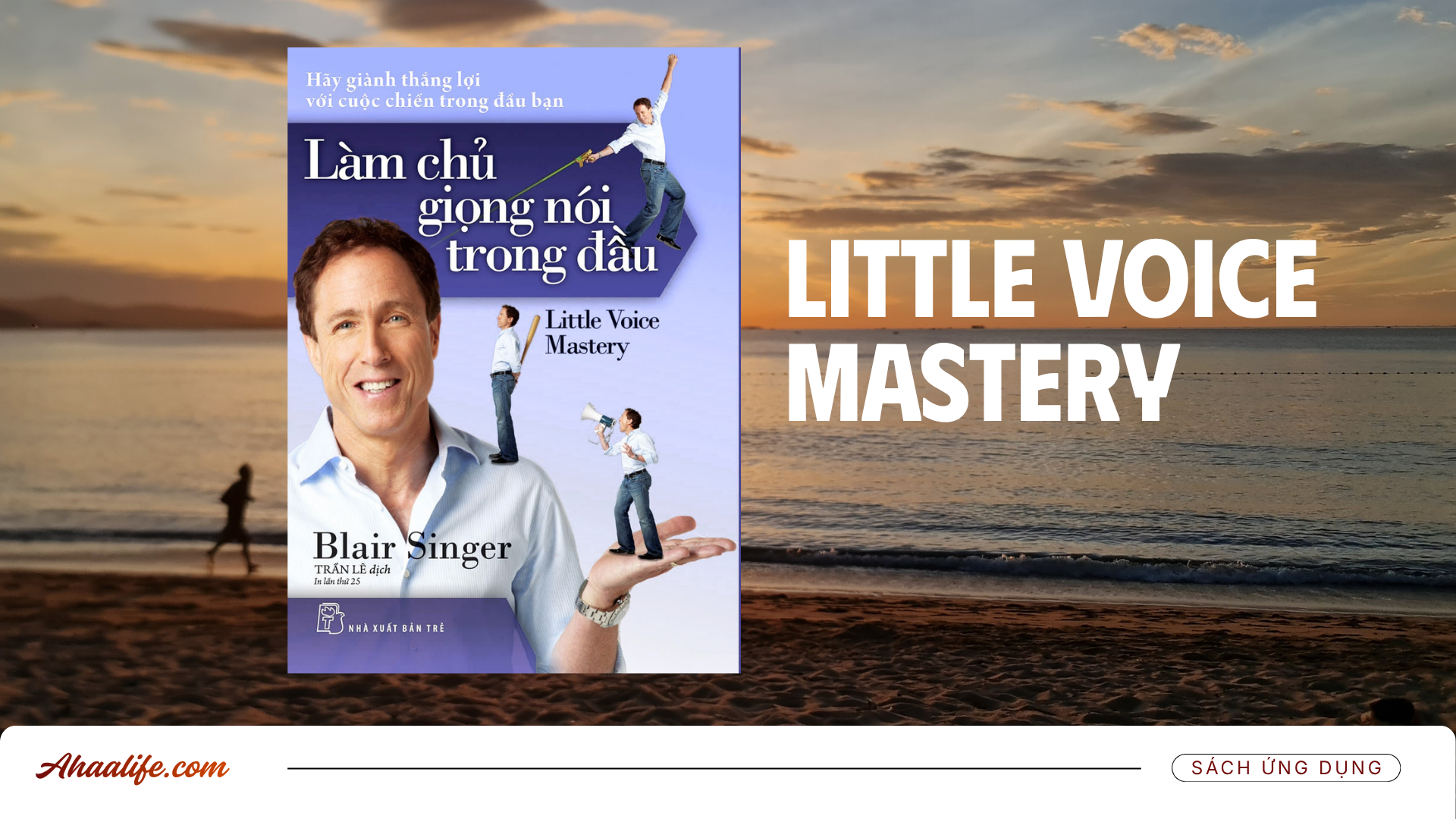
Back then, I mistook that voice for “intuition.” But after reading “Little Voice Mastery” by Blair Singer, I had a shocking realization: That is The Little Voice—a programmed entity built from old fears, past failures, and societal conditioning, hijacking the captain’s seat of my life.

To be clear, this isn’t just another “feel-good” self-help book. Blair Singer—a master trainer and close advisor to Robert Kiyosaki—engineered this as a technical blueprint for the mind’s operating system. He defines the “Little Voice” as an energy parasite, constantly trying to keep you at a low vibration to maintain a false sense of “security.” The book provides 21 battle-tested techniques to “slay the giant in your head,” helping you reclaim 100% control of your behavior in seconds. Blair asserts: If you cannot win the dialogue happening in the six inches between your ears, you will never win against anyone in the world outside.
Here is how I applied the 5 core lessons to architect a life worth living.
1. Awareness: I Am Not That Little Voice
My biggest mistake in the past was identification. It took me nearly half a lifetime to realize a earth-shattering truth: I am me, and the thoughts in my head are a separate entity.
Previously, if someone looked at me coldly, the voice would hiss: “They don’t like you, do they?”. Or if I made a minor mistake at work, it would taunt: “You’re incompetent; no wonder they’re frustrated.” I believed it all. I suffered, agonized, and felt small because I took these words as objective truth.
Thanks to this book, I began practicing Disassociation. I stop and observe: “Ah, the little voice is acting up again.” When you detach yourself from the stream of thought, you see them like clouds passing through the sky. The sky remains still and vast; clouds come and go. As Sadhguru once said: “If you can create a small gap between yourself and your mind, you will know what is real and what is your own fabrication.” That gap is clarity. Since I learned to separate the two, I see things for what they are. I spend less time grieving or complaining because I know most negative scenarios painted by the mind are just ghosts of fear.
2. The Power of the “STOP!” Technique
The professional world is a “battlefield” of overthinking. I remember days when a single cold glance from a colleague could send me spiraling for hours: “What did I say wrong? What are they plotting?”. It was a mental cage that left me exhausted.
The book taught me an iron command: “STOP!”.
Now, whenever I catch myself falling into the pit of over-analysis, I immediately shout “Stop!” in my mind. This interruption snaps me out of the toxic loop. Instead of wasting eight hours agonizing over a look, I use that time for my core goals. Miraculously, when I stop and observe with a quiet gaze, I realize: That colleague likely has their own demons. Perhaps they just fought with a loved one or are being bullied by their own “little voice.” Their hostility isn’t about me; it’s their own pain. Instead of anger, I feel empathy. As the saying goes: “How people treat you is their karma; how you react is yours.” “Stopping” has kept my “karma” serene.
3. Building the “Win Log” – The Vault of Belief
The little voice is a master at playing back your failures on loop. To counter this, I started building a “Win Log”—a tangible record of my victories.
Whenever the voice whispers: “You’re broke, you’re not smart enough,” I flip to my Win Log and read:
- I can generate immense value; wealth is simply a byproduct of the right mindset.
- I have maintained my 5 AM running habit—an iron discipline that builds character.
- I have learned something new every day, growing richer in spirit.
I record even the simple joys: the dopamine rush after a workout, the privilege of living in peace. Recording these micro-wins has built a foundation of happiness. I’ve learned to enjoy the sunrise and birdsong as magnificent gifts from life.
4. Manage Energy, Not Time
This book completely flipped my perspective on productivity. I used to race against the clock; now, I manage my energy. Energy is the soil from which I grow into whoever I want to become.
The quality of life isn’t measured by the hours you work, but by the state of energy you bring to those hours. A gentle breath, a steady stride, a heart that loves what it does—that is true success. I monitor my energy levels like a doctor monitors a pulse. When I feel it dipping due to fatigue or negativity, I don’t push harder. I walk, I breathe, I move. If you control your energy, you master your destiny.
5. 100% Responsibility – The Key to Serenity
This was the hardest lesson, yet it brought the greatest freedom. I have completely retired from the role of “The Victim.” I no longer blame the circumstances, the boss, or the past.
When trouble strikes, I tell myself: “I am responsible because I wasn’t good enough, wasn’t prepared enough, or simply wasn’t focused enough on doing good.” This mindset doesn’t bring guilt; it brings an strange sense of peace. If I am the cause, I am also the solution. Responsibility is literally Response-ability—the ability to respond. By accepting responsibility for everything, I gain the power to respond to everything. Every setback is just “material” for growth.
Final Thoughts for the Seekers of Inner Prosperity
Blair Singer’s book doesn’t teach you how to manipulate others; it teaches you how to stop manipulating yourself. True prosperity isn’t just about your bank balance; it’s about the stillness and decisiveness of your mind. A man with billions who lives in fear of the little voice is still a “poor man” with money. But a man who masters the voice in his head possesses an asset no market can take away: Inner Freedom.
Knowledge in the head is trash; applied to your breath and your actions, it becomes diamonds.
Discipline is the backbone; Freedom is the breath. Start by “firing” that terrible inner manager today.
Stay strong on your journey to self-mastery, brothers!