I. The Thin Line Between Two Worlds
We live in a strange age: an age of limitless connection that somehow brims with lost souls. The churn of modern life has turned “being alone” into a collective fear. People dread the empty spaces. They dread the moment the phone dies, the evening with nothing on the calendar, the ticking of a clock in a quiet room. To outrun that fear, they throw themselves into parties, into meetings that never end, into shallow acquaintances – all to prove to the world and to themselves: I am busy, I exist.
But have you ever noticed that even in the middle of ten thousand people, amid the thumping music and clinking glasses, a hollow pit can still open up in your chest? That is the moment you touch a hard truth – loneliness has nothing to do with how many people surround you.
Inside that noisy world runs a thin line, yet one that divides “being alone” into two states utterly different at the root: loneliness and stillness. Loneliness is standing among many and still feeling apart. Stillness is being alone and feeling like the whole universe. Loneliness is the lack of an outward-facing soul that needs the world to fill it. Stillness is the freedom of an inner life that stands firm and shines on its own. The journey from the fear of loneliness to the embrace of stillness is not an escape – it is an awakening, until we realize that being alone is precisely when we are most whole.
II. Learning to Stand Alone
1. The past and the ghost called “loneliness”
Looking back over the years, I won’t pretend otherwise: I was once pitifully afraid of being alone. Back then, I feared not being noticed, feared turning into someone invisible. I believed a person’s worth was measured by the number of calls in a day, by the approving nods of colleagues, by a dense presence at every event. Whenever I had to be alone, I rushed to paper over it – the TV on though I wasn’t watching, the music turned up loud, a quick message fired off to someone, anyone. It was a state wholly dependent on the world outside.
When the mind hasn’t grown up yet, we are like beggars asking the world for its approval. The moment the world looks away, we fall into the cold. Loneliness carries the energy of clinging and bewilderment. It exhausts a person, who must keep wearing masks to fit the crowd.
2. The turning point: stillness is a fullness
But life always has its turning points, the ones that wake us. Through the stumbles, through the weariness of a life full of upheaval, I slowly began to feel the great difference between loneliness and stillness. When the fear of being left behind dissolved, a new dimension opened inside me.
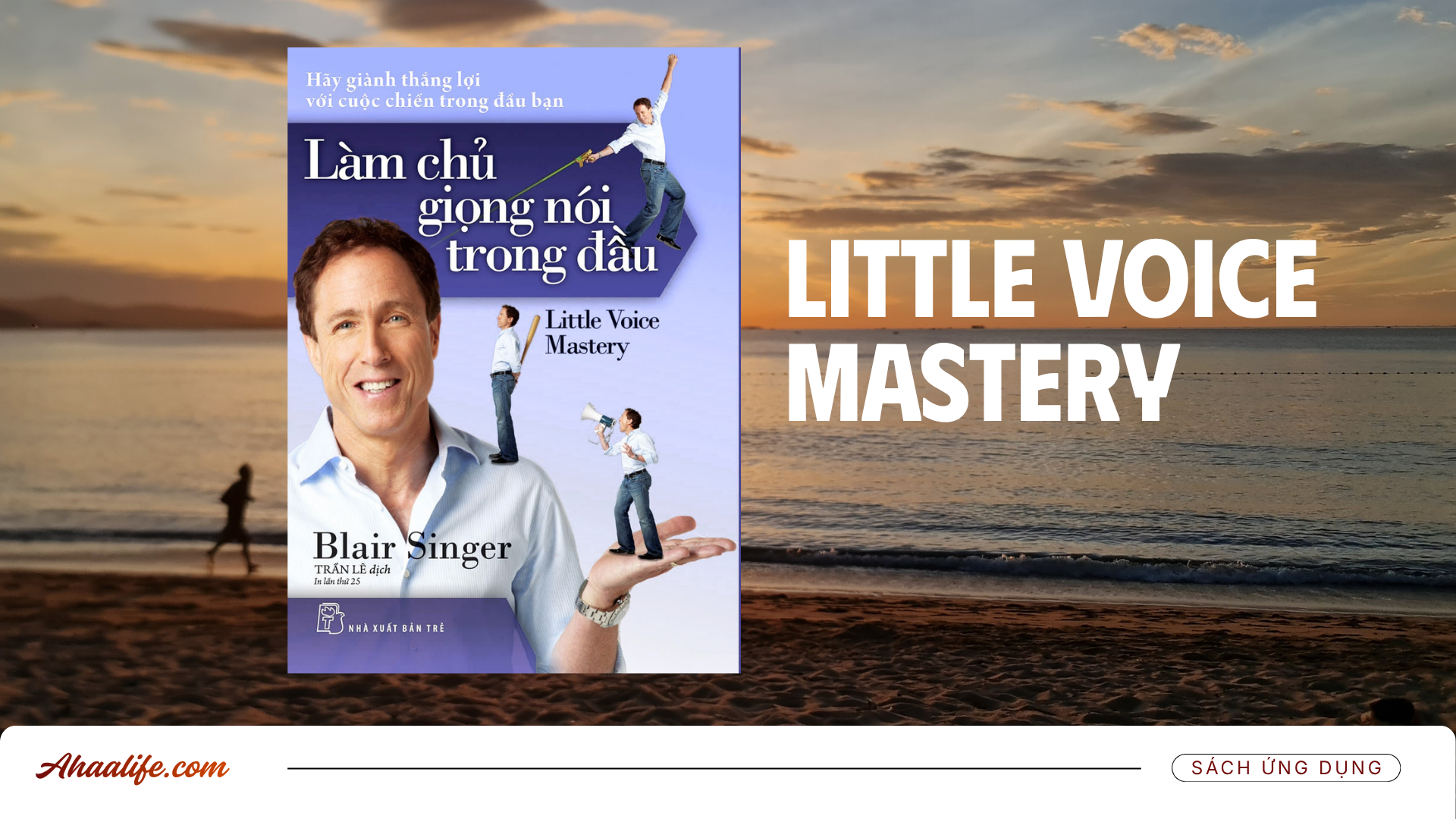
Stillness (solitude) is not loneliness. The Zen master Thich Nhat Hanh, in his book Silence, wrote that stillness doesn’t mean saying nothing and doing nothing – it means not being disturbed within; the truly still person keeps that stillness even while standing in a crowd. It is an active choice of the soul. Alone in stillness, you don’t feel empty – you feel your mind grow vast as the sea. You don’t feel cut off from the world; you feel that you are the world’s own current. Stillness carries the energy of wholeness, freedom, and an original peace. It is like a lake without a ripple, mirroring the sky and the stars most faithfully of all. And here is its most beautiful paradox: the moment no one is beside you is the moment you connect most deeply with everything.
III. Still Moments Inside Busy Ordinary Days
Stillness is not a privilege found only in faraway monasteries or on peaks wrapped year-round in cloud. It shows up in the heart of ordinary life, in the small corners of a crowded office day – if we know how to receive it on purpose.
1. Eating alone after long, draining meetings
The modern corporate world tends to champion the culture of togetherness. Going to lunch as a group, talking shop or trading small talk, gets treated as the measure of how well you fit in. And yet, among many colleagues I’m genuinely fond of, there are times I still choose to eat alone.
Some who see this will think: “He must be upset about something, or maybe he’s being shut out?” They don’t know that it is not separation, selfishness, or eccentricity at all. It is simply a few minutes of settling after a long meeting, where lines of thought keep colliding and the pressure of numbers presses on every nerve.
Eating alone is a ritual of returning the mind to the body. In that small space of my own, I let the mind come to a full stop. No plans, no strategies, no conversations without end. I sit there and receive the plate in front of me with complete attention – the clean sweetness of a stalk of greens, the depth of the sauce, the smell of rice just cooked. That attention turns an ordinary meal into a moment of deep mindfulness. The energy is replenished, the head cleared, ready for the next challenge. It is not running from colleagues. It is coming back to care for myself.
2. Silence as the filter of thought
The philosopher Blaise Pascal once observed that nearly all of humanity’s troubles spring from a single thing: our inability to sit quietly alone in a room. When we can’t bear silence, we say things we don’t need to, make hasty decisions, and get swept along by other people’s negative feelings. Active stillness in the middle of the workday lets us build a sturdy “filter” for thought. By knowing when to stop, we are no longer carried off by storms of information, no longer reacting blindly under pressure, but seeing things with a clearer and more forgiving eye.
IV. Dissolving Into the World: When Nature Speaks
Once you step beyond the concrete walls of the city, stillness opens onto a vaster scale – where a person is no longer a separate thing, but becomes one with the universe.
1. Sinking into the open sea
Swimming in the open ocean, swimming far, swimming alone – it is a strange and wonderful thing. Once you’ve left the sand behind, left the shouting of the tourists, the surrounding world suddenly withdraws, leaving only the deep blue of water and sky. You sink fully into the vast emptiness of the sea.
And strangely, in that moment, not a trace of loneliness slips into the mind, not a hint of cold closes in. Instead there is a feeling of total immersion, like a child returning to its first home, held whole in the arms of the sea. Each stroke, each breath falling in time with the waves. I feel the cool water gliding over my skin, easing the marks time has left. The ocean is no longer something to fear, but a great mother pouring living energy into every cell. In those deep waters I see how small I am, small as a single drop – and it is precisely because I am small as a drop that I can melt and become the ocean itself.
2. The breath of nature on green fields
Another experience brings me the same pure ease: going somewhere alone, among the grass and wildflowers. On certain afternoons I cycle alone across vast green fields. Around me the rice stalks whisper the story of the earth, the roadside wildflowers quietly give off their scent without needing anyone’s praise. Only the grass and flowers witness that I am here – and right then, I feel myself dissolving into the universe.
This is not a dodging of responsibility, not fleeing anything hard, but a moment of deliberately listening to nature breathe. Listening to the wind rustle through the leaves, the insects rasping under the grass, and the steady beat of my own heart. Thoreau, in Walden, confessed: “I never found the companion that was so companionable as solitude.” It’s true – when you can hear nature breathe, all the worry and calculation suddenly grow light as a wisp of passing smoke.
V. Da Lat and Journeys Taken Alone
I know this way of living sometimes puzzles the people around me. The world is quick to label anyone who likes being alone as “odd,” as someone “with psychological problems.” There was a time I feared that label too. But once you’ve tasted the sweetness of freedom in stillness, those judgments lose their weight.
1. The ritual of running in early mist
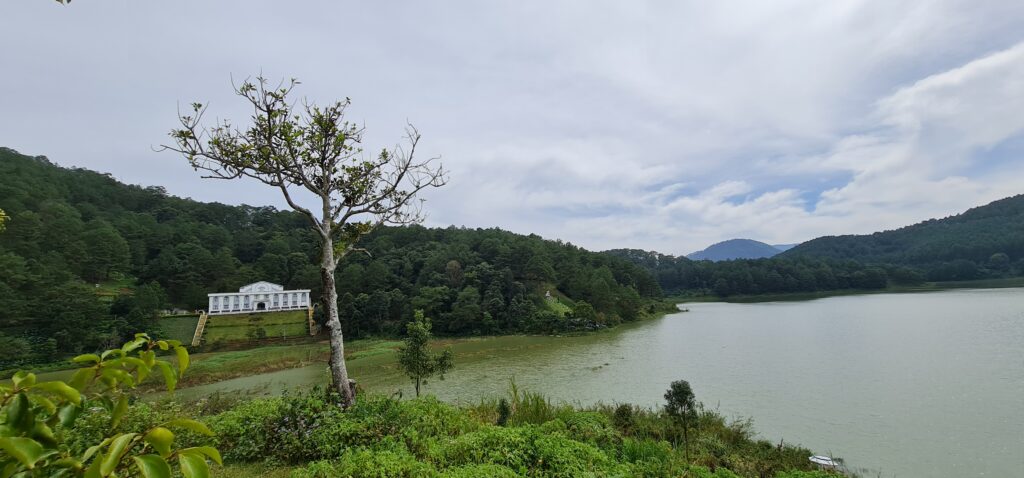
Each year I get a few special occasions: when my wife takes our child away on a company trip. For many men, that would be a chance to gather friends and drink until dawn. For me, it is a golden stretch of time to be completely free. And I tend to spend it in a way all my own: pack a bag and head straight for Da Lat.
Da Lat greets me with its signature biting cold and its drifting fog. There I set up a rhythm disciplined to the point of harshness, yet brimming with the pleasure of freedom: to bed very early, up before the sky has begun to lighten. Out of the hotel, I throw myself into the silence of Xuan Huong Lake. Only the steady fall of footsteps on the road, the heaving of breath, and the mist closing around me.
I run – not to compete, not to prove anything to anyone, but to hold a conversation with my own body. Thirty kilometers, sometimes forty, until the muscles give out. And the body’s exhaustion brings a strange release for the spirit – as if I’d just shed every layer of dust, every psychological weight piled up over the years, leaving the body wholly made new.
2. Savoring great music alone
After a day of pushing the body to its limit, the evening is the time I give to the soul. I often go to hear music at May Lang Thang – an open-air stage set among the drifting clouds of the Da Lat sky. Nearly every singer who performs there is one I love.
Many will ask: “Why not bring your wife and child along, make it fun?” The answer is simple: with a child along, the child won’t enjoy the music, will get bored fast, will fuss, and my attention will be split toward caretaking. Alone, I feel something rare – a sense of being whole, one of a kind.
Sitting through the music in that wind-swept space, I’m not pulled away by any conversation. I pour every sense into each note. Under the stage lights, I watch, rapt, the drummers laying down their blazing rhythms, the pianists’ hands gliding across the keys – all of them masters of their craft. Each sound threads deep into the mind, stirring every hidden corner of feeling. Alone, I don’t feel lonely, because the music has become a kindred spirit, and I am communing with that kindred spirit in the purest way. That is the gift only stillness can give.
VI. Generosity Toward Different Points of View
Stillness doesn’t only turn us inward; it widens the heart’s capacity, so that we learn to be generous with others.
1. The 82km record and the verdict “what a pointless life”
Every time I return to my hometown, I seize the afternoons once the sun has softened to take the bicycle out. I ride across vast rice fields, through villages green and cool and serene. On some days, when the inspiration rises, I ride all the way to the sea, take the great gusts of sea wind full in the face, swim a few easy laps in the cool water, then amble back home on the bike. The whole journey runs 82 kilometers – my own record, the farthest I’ve ever ridden in a single day.
When people hear me tell it, or see me coming and going on my own, some say I’m living a pointless life: “Riding that far alone, doesn’t it get boring? What kind of life is that, so solitary?” Faced with those words, I feel no anger, no need to explain myself. On the contrary, I understand them completely. Why? Because I see my own former self in them. I was once exactly that kind of person, once passed the same shallow judgments on those who liked being alone. Before you’ve climbed out of the swamp of the fear of loneliness, you will always see being alone as a punishment.
2. The law of growing up
That understanding led me to a deep truth: only with enough sun do flowers bloom, only with enough ripeness does fruit form, only after tasting enough noise do we learn to treasure stillness.
You cannot ask someone in the thick of restless youth, hungry to prove themselves before a crowd, to grasp the beauty of an afternoon spent sitting in silence. A person has to pass through the noisy years, has to wear themselves out on revelries that last till dawn, has to taste betrayal, heartbreak, and hollow glory too – and only then learn to treasure the moments of coming home to themselves. Stillness is the sweet fruit of growing up, the reward for those who dared to walk through the storms and find the harbor of the soul. As Osho put it, loneliness is a sickness of the soul, while stillness is perfect health. There’s no need to flee the noise to some extreme – just receive stillness as a natural evolution of awareness.
VII. Closing: At Ease Amid Endless Storms
I’ve come to see that it is precisely by cherishing stillness, by knowing how to savor being alone, that my soul has been fed by an abundant source of energy. The world out there is still the world – still an endless current of worry, of making a living, of market swings and tangled relationships. The storms have never stopped beating, and the tempest can arrive at any moment, unannounced. But once you hold a still world within, you find you can live at ease amid all those endless storms.
Stillness doesn’t make us numb or turn us away from life. It gives us an anchor. When the mind is unmoved, the world may move all it likes and still cannot bring us to our knees. We meet praise and blame with a calm smile, meet loss with a light heart, and welcome joy without being swept into arrogance.
So stop fearing loneliness. Stop running from the quiet. From the depths of the soul, be grateful to this earth and sky for the moments of stillness they grant us – the moments we are handed back to ourselves, unshaped, unperformed. Don’t treat stillness as medicine taken after a wound, but seek it out as a way of living full of ease, the high art of an independent spirit. I walk through this life steady and at ease, because I know one plain truth: behind every storm, the sky turns calm again.
Ahaalife – A life worth living.