Have you ever felt like life is an endless loop with no way out? Have you ever stood at a crossroads where fear loomed larger than faith?
Today, I want to tell you about a younger friend of mine who was “tough as nails.” He started out in a damp, mold-streaked rented room in Saigon, carrying the weight of debt and his family’s expectations on his shoulders. Back then, the dream of a better life felt like an impossible luxury, when reality was nothing but one cold splash of water after another.
Part 1. Long Days Under a Rusty Tin Roof
There are memories that come rushing back the moment you brush against them – the musty smell of cheap rented rooms, the creak of a ceiling fan. That year, I was a guy who’d been knocked around by life, while he – the roommate six years younger than me – was a fresh graduate whose eyes always carried the worry of someone shouldering debt and his family’s hopes.
The two of us came from the same starting line: poor kids who’d left the countryside for Saigon chasing a dream of a better life, only to have reality slap them with ice-cold water instead. He studied hard, and he was so gentle and honest that I sometimes worried this world would take advantage of his kindness. In the afternoons, after exhausting hours of classes and part-time work, our only joy was the neighborhood basketball and football courts. I still remember, vividly, those dramatic team goals and razor-sharp passes – and even now, almost a decade later, I still think they were more beautiful than anything in a professional league. Because back then, we played with all the innocence of people who had nothing but their youth.
But once the final whistle blew, we were pulled straight back into harsh reality. He graduated, diploma in hand, but his first job was anything but smooth. His meager salary barely covered rent and food, let alone sending money home to pay off his tuition debt. One evening, he looked out the window of our rented room, where the pale yellow glow of the streetlight spilled in, and sighed quietly: “Man, at this rate, when will we ever afford a house, a car? Or are we just going to be stuck in this loop forever?”. The question hung in silence, because at the time I was searching just as desperately for an answer to my own life.
Part 2. The “Grit” of a Will That Refused to Yield
I always believed he would succeed – not because he was exceptionally brilliant, but because he had a kind of “grit” few young people possess. For a while, to save every possible penny to send home, he moved into a rented room so cheap it was almost frightening. It was a row of run-down, deserted houses tucked deep in an alley that people whispered had “more ghosts than tenants.” Stepping inside, you felt nothing but cold and darkness. Yet he stayed – going to work every morning and coming home every night to teach himself Japanese in that gloomy space, never once losing heart.
What’s more, he was a martial artist. His district- and provincial-level medals weren’t just titles – they were proof of how much he could take a hit and keep standing. As a runner, he could casually run 10 kilometers in under an hour. Watching the way he strode down the track, and the way he endured that crumbling rented room, I knew there was no hardship in this world that could bring him down.
One day, he came to find me, a new spark lighting up his eyes. He told me about a work-study program in Japan. At the time, I’d just returned from a long stretch of training and working in South Korea, so I had some experience navigating life abroad. After a few visits with him to a consulting center, I felt the program was solid. He was eager to go, but his fears ran just as deep: fear of being scammed, fear of having zero foreign language skills, fear of “losing money and suffering for it.”
I encouraged him to go, because I knew that with his honesty, his kindness, and the “grit” of a long-distance runner, he deserved a bigger stage than that rented room.
Part 3. A Land of Sakura Blossoms and Iron Discipline
The day he left, I patted him on the shoulder and said:
“In Japan, even if you have to beg, don’t give up. Don’t come home until you’ve made it – and if you hold that line, you’ll win for sure.”
Japan is no paradise for the lazy. It’s a land of extreme rigor and discipline. Setting foot in that country, he had to confront the culture of Omotenashi (wholehearted devotion) and absolute precision. In Japan, a minute late is late; a millimeter off is wrong. The Japanese demand perfection down to the smallest detail. He went from a young man used to Vietnam’s easygoing lifestyle to someone forced to fit himself into an intricate code of conduct – from the proper way to bow, Ojigi, to sorting trash with a level of detail that could give you a headache.
In those first years, we rarely spoke. I understood – he was in “survival mode.” He had to learn to adapt to winters blanketed in white snow, cold enough to break the willpower of anyone not resilient enough to withstand it. He worked under high pressure in factories, then came home at night to bury himself in books, studying for the N2 and N1 Japanese proficiency exams. But it was that old foundation – running 10 kilometers in under an hour – that helped him hold his ground. He never gave up!
Part 4. A Reunion by the Dreamy Lake Biwa
Nine years later, I got a phone call from Japan. His voice came through – no longer carrying the worry of years past, but the calm confidence of a grown man: “Hey, come visit me in Japan. I’ll cover everything while you’re here – I just bought a car, so I’ll drive you around.”
That invitation carried not just affection but a statement about how far he’d come financially. Anyone who has traveled to Japan knows just how expensive the cost of living is there. I said yes on the spot!
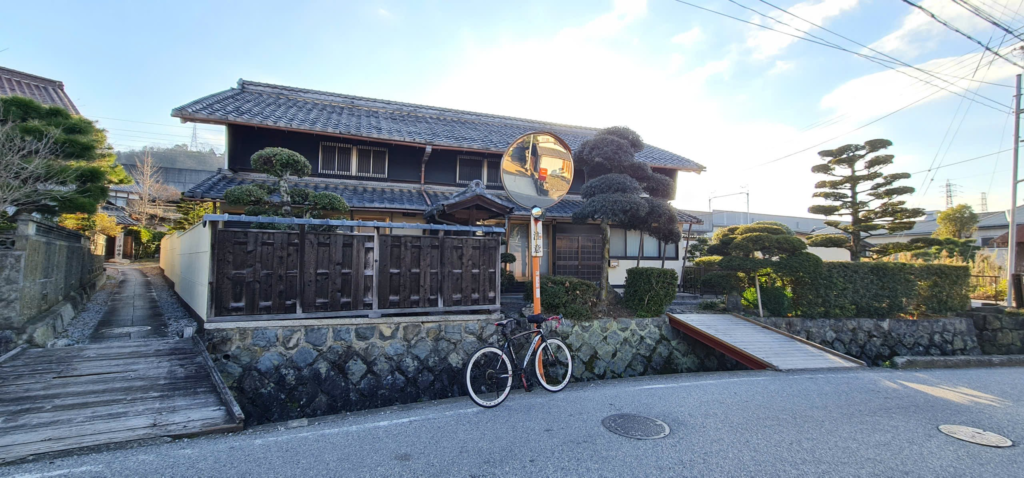
When I stepped off the plane and saw him again, the once-naive kid from nine years ago was now the head of a happy little family. He took me home – a small, charming house right next to Lake Biwa, in Shiga Prefecture.
Lake Biwa is Japan’s largest lake, a shimmering jade jewel with crystal-clear water. Next to his house stands the ancient Hikone Castle, its moats ringed with swans gliding leisurely across the water.
Early one morning, with mist still lingering over the lake’s surface, I stood on his balcony and realized something startling: every morning his family wakes up, they’re essentially waking up somewhere millions of Vietnamese people dream of visiting.
Part 5. A Family Reunion Dinner and the Bittersweet Taste of Success
That evening, he prepared a lavish feast to welcome his old friend. We sat in his cozy home, the table filled with Vietnamese dishes cooked from fresh ingredients bought at the supermarket down the street. He cracked open a few cans of Asahi Super Dry. That crisp, refreshing taste so characteristic of Japanese beer seemed to give our old stories even more flavor.
He laughed, recalling what I’d told him nine years earlier: “You know, at my lowest point, when I wanted most to just give up and go home, I kept remembering your words – ‘even if you have to beg, don’t give up.’ I told myself, if I go home now, I’ll just end up back in that old rented room, back in that same old loop. So I kept going.”
I looked at his family, then out the window. Japan spread out before me, beautiful as an ink-wash painting. Back in Vietnam, how could he ever have experienced four seasons shifting so distinctly?
• Spring: The entire area around Lake Biwa turns pink with cherry blossoms (Sakura). Delicate petals drift on the wind like falling snow, blanketing streets that are spotless, without a single piece of litter.
• Summer: Dazzling fireworks festivals light up the lake’s surface, the air so clean you can fill your lungs without a hint of smog.
• Autumn: Maple leaves turn a brilliant red (Momiji), wrapping around Hikone Castle in a scene of quiet, timeless beauty.
• Winter: Pristine white snow blankets the rooftops, creating a stillness that feels almost surreal.
We talked about how civilized people are there. In Japan, pedestrians greet each other, and cars automatically stop to yield to pedestrians at intersections without traffic lights – it’s simply the natural standard. Food is clean to an absolute degree; the “Japanese standard” is a guarantee no one ever needs to question.
Part 6. The True Meaning of “A Life Worth Living”
What moved me most wasn’t the fact that he now had a car or a house of his own. It was seeing him bring home a piano and set it up in the middle of the living room. He’s no musician, but he hums along and plays a few tunes with me now and then. A man who once struggled through slum-like rented rooms, once a “tough as nails” martial artist, now sits playing piano in a space of peace and quiet – that, to me, is the soul finally rising, once the old worries have faded.
His house isn’t a lavish villa, his car isn’t a luxury supercar, and his job isn’t a senior management position at some multinational corporation. His kids attend an ordinary public school, just like every other Japanese child. But watching how he lives, I told him plainly: “You’re living a life worth living.”
It’s worth living because he gets to breathe unpolluted air, live in one of the most civilized societies in the world, where human rights and safety come first. Getting around means a dense rail network – step outside, and a station is right there. And if he wants a change of scenery, all it takes is hopping on the Shinkansen bullet train – a marvel of technology that flies like the wind yet rides so smoothly you could set a glass of water on the table and it wouldn’t spill. I traveled with his family from Osaka to Tokyo, covering more than 500 kilometers in the blink of an eye, watching majestic Mount Fuji appear outside the window as the train passed through Yokohama. Experiences like that – sometimes money can’t buy them. You have to earn them through persistence and vision.
A Message for Those Standing at a Crossroads
The journey of my old roommate is powerful proof of the strength found in never giving up. Starting with nothing, he held his ground on this harsh but fair land and built himself a home.
Looking back on these nine years, I’ve realized that the advice – “even if you have to beg, don’t give up” – is really a lesson about accumulation. Every past loss, every setback, every hardship is never meaningless. If you don’t stop, if you keep building both skill and willpower, then everything you’ve lost will eventually come back to you in full – perhaps not in the exact same form, but as something worth many times more: a new standing, a new mindset, and a new life.
Saying goodbye to him at the airport before heading back to Vietnam, I no longer felt worried for him. In the land of the rising sun, my old friend had truly found his own way to shine. And I know that whether nine years pass or ninety, that spirit of “never giving up” will always guide him toward new heights.
Because in the end, life is only ever truly fair to those who dare to walk their chosen path all the way to the end.
Ahaalife: A Life Worth Living!