One handwritten question every morning. Thirty minutes of financial study every day. One page of a book every night.
Nothing remarkable about any single action. But stack three years of them together and they turned a financially illiterate engineer into someone who reads cash flow with confidence – not through talent, but through consistency with things so small most people ignore them entirely.
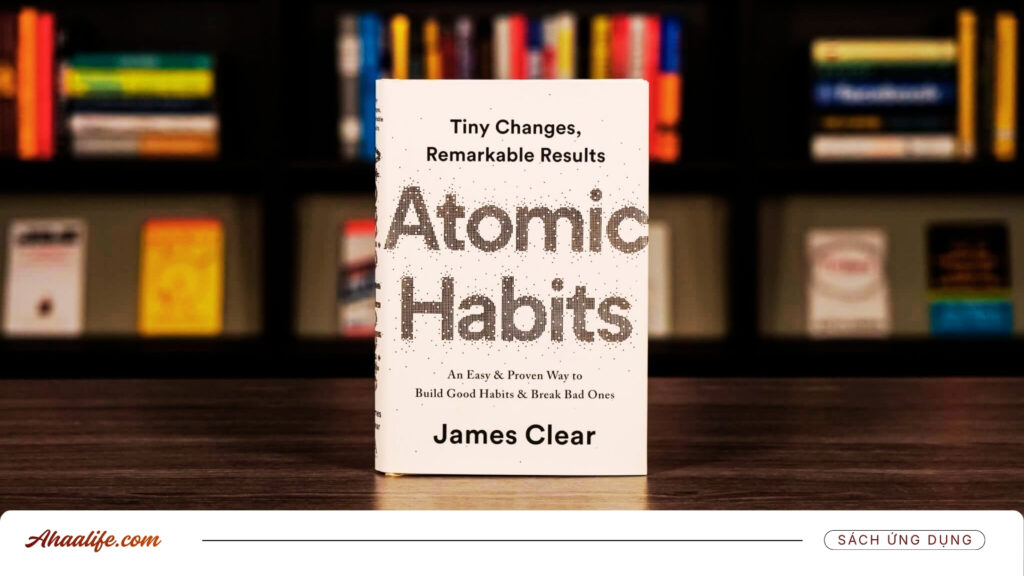
This isn’t a summary of Atomic Habits. This is what happened after I closed the book and actually lived it.
Systems beat goals
The period when I was obsessed with target numbers was the most exhausting of my life. Numbers on the wall, on my phone wallpaper, on the bathroom mirror. Every morning I saw the destination. Every morning I saw how far away I was. Motivation leaked out like water evaporating from an open glass.
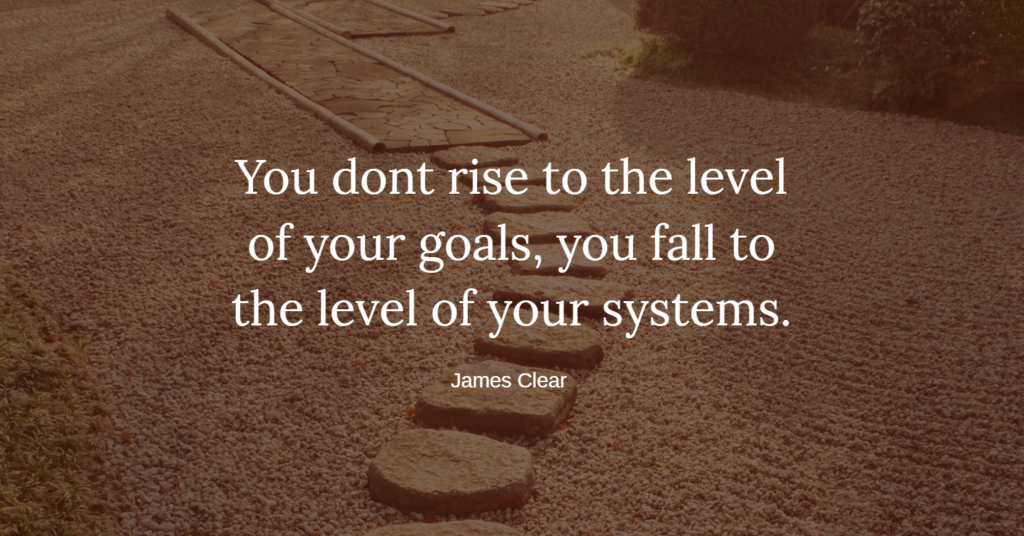
James Clear compressed that entire mistake into one sentence: “You do not rise to the level of your goals. You fall to the level of your systems.”
Winners and losers often want the same things. Everyone wants to be rich, fit, skilled. The differentiator isn’t the destination – it’s the personal operating system running beneath the surface every single day.
I took down every goal sheet. Replaced them with one question: what do I need to do each day – even just 30 minutes? First answer: study finance, keep an investment journal. Unglamorous. But 499 unglamorous axe swings are what fell the tree – not the 500th.
When the financial system stabilized, my entire work presence shifted. No more sitting in meetings weighed down by money anxiety. Clearer decisions, freer communication – and paradoxically, income rose. That income fed back into the system. The upward spiral started from the smallest brick.
Discipline doesn’t cage you. Discipline builds the foundation freedom stands on.
The 1% equation and the Valley of Disappointment
1.01³⁶⁵ = 37.78. Better by 1% daily, you’re nearly 38 times improved after a year. 0.99³⁶⁵ = 0.03. Worse by 1% daily, you’ve nearly disappeared.
Two people, same starting point, same ability. Five years later, one is floors above, the other hasn’t left the ground. Not talent – daily micro-choices. Read or scroll. Record or forget. Train or stay in bed another 15 minutes.
But exponential curves have a trap: the early phase is flat. You train and see no change. You study and still feel ignorant. You save and the balance barely moves. The brain whispers quit. Clear calls this the Valley of Disappointment – where most people stop, right as invisible value compounds beneath the surface. The return always arrives late. When it does, it arrives with compound interest.
Sir Dave Brailsford rescued British cycling – a century of failure – without a miracle. He found 100 things to improve by 1%: saddle design, sleeping pillows, muscle rub. A decade of dominance born from details no one bothered to notice.
Worth asking: in your life, what’s the “saddle” that needs redesigning?
The 2-minute rule – building identity, not habits
Every time I tried to start something new, I thought big. Read for an hour daily. Write 1,000 words each morning. Study a language for two hours each night. First week blazing, third week gone.
Clear broke the pattern with an idea that borders on absurd: shrink every habit to 2 minutes. Write one sentence. Read one page. Learn three words.
Absurd until you understand the mechanism: you’re not building a reading habit – you’re building the identity of a reader. Two minutes doesn’t produce meaningful output. It produces identity. And once identity shifts, behavior realigns on its own – no willpower, no forcing. Atomic in the truest sense: invisible to the eye, yet powerful enough to restructure who you are.
I started with one page each night. The hardest part was always picking up the book – once the first page opened, the mind pulled itself in. One became five, five became ten. Years later: over 300 books. The number doesn’t matter. The lived wisdom accumulated from those 300 books became the raw material for building Ahaalife.
Design the environment, don’t trust willpower
Willpower is fuel in a tank – every internal struggle burns some off. By evening, the tank is empty and you’re on the sofa scrolling. That’s not weakness. That’s biology.
Clear’s four laws are really four ways to design a mental infrastructure so habits run automatically, independent of willpower:
Obvious – workout clothes beside the bed, financial notebook beside the coffee cup. No extraordinary resolve needed. Just a room arranged correctly.
Attractive – running paired with an economics podcast. Thirty minutes that train the body and feed the mind simultaneously. The brain sees gain, not obligation.
Easy – the 2-minute rule. An entry door wide enough that you never hesitate to walk through.
Satisfying – an unbroken streak on a habit tracker. Each day you stand another domino tile. You don’t want to be the one who topples the line.
When all four laws align, something shifts: you stop “trying.” You start living at the right rhythm. Days without movement and the body feels off. Days without reading and the mind feels hungry. Good habits become instinct – effortless as breathing.
Repeat like a spiral, not a clock
Two kinds of repetition. A clock hand – always turning, going nowhere. A spiral staircase – looks circular from above, but viewed from the side, it climbs.
The difference is one word: feedback. Do you pause after each loop to calibrate, or do you just keep running without looking back?
Edison didn’t call 10,000 experiments failure. He called them 10,000 methods eliminated. Every day he walked into the lab for the joy of the process, not for the lightbulb. He smiled at the variables – because every variable hid a lesson.
Repeat with awareness, not inertia. When you repeat a good habit with full presence, you’re not circling – you’re climbing steps so small you don’t notice the ascent until you look down.
Atomic Habits doesn’t promise overnight transformation. It tells the truth: real change takes a long time, but starting takes only 2 minutes.
Facing a mountain too large – don’t look at the peak. Look at your hands. Pick up a pen. Write one sentence. Open one page. Walk one lap around the house. Once the system starts moving, momentum handles the rest.
That’s the inner anchor no one can take from you – a personal operating system powered by consistency, not inspiration.
Ahaalife – A life worth living.