
When I was eight or nine, I spent an entire afternoon on the porch of our house, carefully knotting together scraps of thread I had collected from the seamstresses in our village – blue pieces, red pieces, white pieces – into one patchwork kite string. When the kite finally caught the wind, I looked up and saw a tiny airplane crossing the sky, and wondered: if someone up there looked down at me, how small would I be?
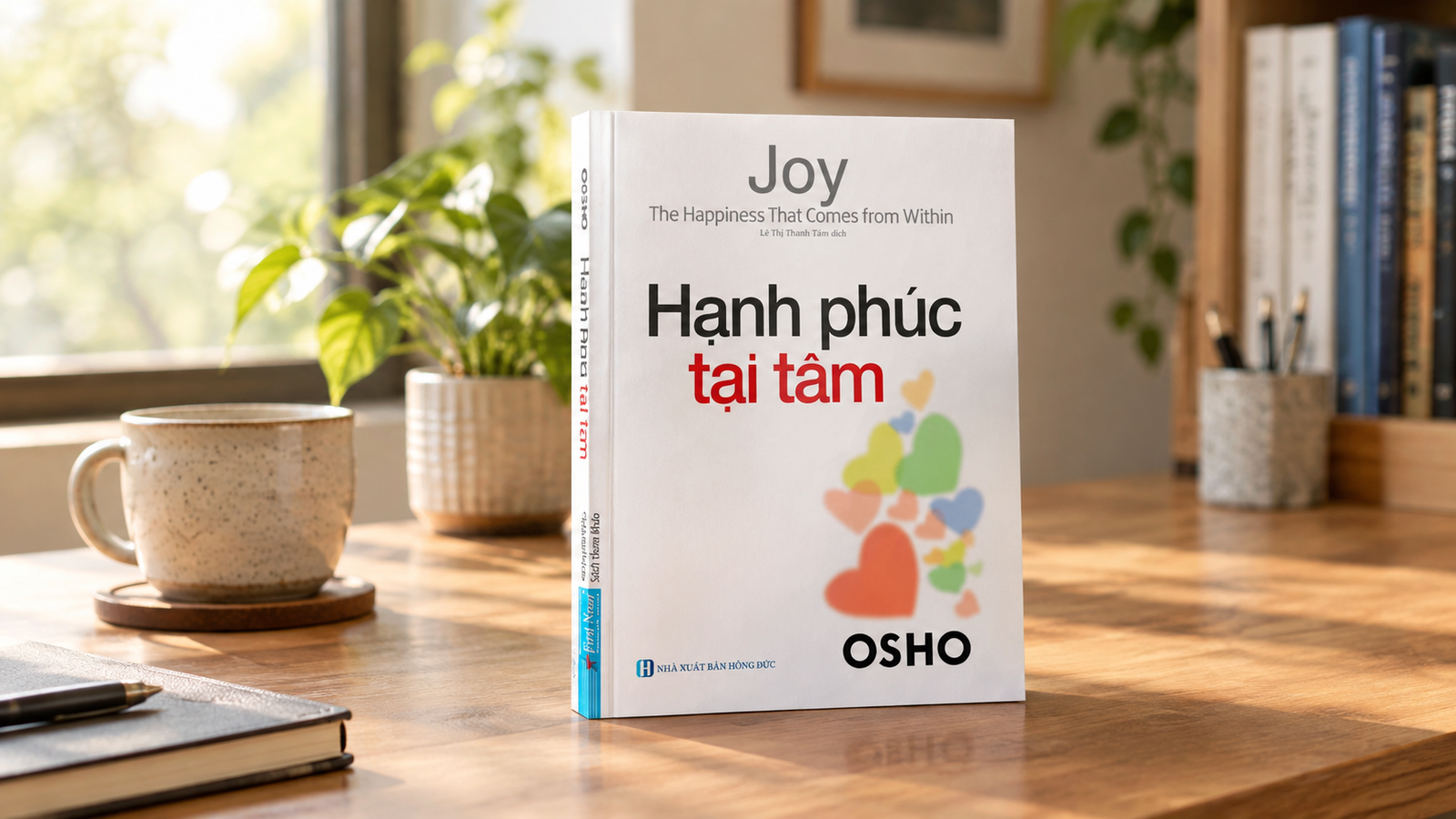
More than thirty years later, I was sitting in a business lounge at an international airport, and I laughed. The distance between that kite string and the leather chair was not a distance of wealth. It was a distance of understanding. And most of that understanding, I owe to one book – “Understanding the Heart” by Vietnamese Buddhist monk Thich Minh Niem.
These are five lessons I took from it. Not five lessons I read. Five lessons I lived.
1. Suffering Is the Raw Material of Happiness
Thich Minh Niem writes: “Without suffering, we would never know what happiness is.” It sounds paradoxical. But it points to something most people resist looking at directly: happiness does not exist in a vacuum. It needs a point of contrast.
The people sharing that business lounge with me were frowning at slow wifi, irritated that their orange juice wasn’t cold enough. For them, the comfort was unremarkable. For me, every time I sit on an airplane, I think of the boy looking up from the rice fields. And I feel a happiness that has nothing to do with having more than anyone else – it comes from remembering what it felt like to have nothing.
Suffering is not the enemy. It is the raw material that builds depth into a person. Without it, success is just a coat of paint – beautiful, but easily chipped. I have lived with this lesson for over ten years. It still holds.
2. Happiness Comes From Within
The book offers a deceptively simple idea: happiness is a state of mind that no longer resists or clings to present circumstances. Not when everything outside is fine. When you are fine inside – regardless of what is happening outside.
For a long time, I lived the opposite. Every Monday morning, my first thought was: “God, another Monday.” That thought turned work into a sentence – eight hours a day I handed down to myself. I did not hate my job. I hated the mindset I brought to it.
So I changed one thing: I replaced that first thought with “Another day to show up.” It sounds almost embarrassingly simple. But the logic holds – I will not work at this company forever. Given that, why waste any day I am there with resentment? I started walking into the office with an open mind – there to learn, there to build something with the people around me. Slowly, the team shifted too. Not because I demanded it, but because energy moves. When a project hit trouble, we would look at each other: “Alright, let’s solve it.” Happiness stopped depending on whether the boss was pleased or the numbers were up. It started coming from inside.
3. Understanding Before Caring
The book makes a distinction that changed how I lead people: you cannot truly care for someone you do not understand. Not the soft, sympathetic kind of caring – the kind with real foundation beneath it.
For a period, I was a “good” manager by conventional measures. Fast decisions, clear delegation, tight KPIs. But I talked far too much and listened far too little. Employees would start explaining something, and I would cut them off halfway: “I get it – do it this way.” Every interruption was a door I slammed shut – the door they were trying to open to show me what they actually thought, what they were worried about, what they could not say directly.
After absorbing this lesson, I built one small habit that changed everything: pause before reacting. When someone brings bad news, I do not respond immediately. I breathe, and I ask: “Tell me more.” When a partner makes an unreasonable request, I do not push back. I ask: “Why do you need this?”
Four words – “Tell me more” – opened a world I did not know existed while I was busy talking. Understanding creates agreement. And when people agree from conviction rather than obligation, almost any obstacle in an organization becomes manageable. This is not kindness. It is high-intelligence leadership.
4. Mindful Awareness
Thich Minh Niem defines mindfulness as the ability to observe what is happening inside you without judging it or identifying with it. The first time I read it, I found it interesting but abstract. It took managing over 1,200 people before I truly understood it.
Before, when I was angry, I was the anger. When I was anxious, I drowned in it. The emotion and I collapsed into each other with no separation. Like watching a horror film and forgetting you are in a cinema – you flinch and panic because some part of you believes you are inside the film.
The book taught me to split. Now when anger rises, I notice it – “Ah, anger arriving.” No suppression, no denial. Just recognition. In that moment, the anger is still there, but it loses its authority. I am no longer the anger. I am the one observing it.
The practical application is immediate. In a tense negotiation, when pressure comes from every direction, I split – one part of me is in the room, another part is watching from above. That observing part is where the clarity lives. It is what lets me choose my response instead of being chosen by it. Working sixteen-hour days becomes sustainable not because of endurance, but because you are no longer carrying the weight of every emotion as your own.
5. Letting Go and Forgiveness
In the book, Thich Minh Niem offers an image that stayed with me: forgiveness is the fragrance a flower leaves on the heel of the shoe that crushed it. The flower is broken – but instead of bitterness, it leaves scent. Forgiveness, he says, is not weakness. It is the mark of someone with deep understanding.
I was terrible at this for a long time. When someone wronged me, I remembered. In careful detail. A partner who broke trust – noted. A colleague who betrayed – stored. I thought remembering was how I protected myself. What I did not see was that every time I “remembered,” I was loading another brick into the pack I carried. Walk long enough with that pack and you stop noticing why you are tired.
Letting go is not indifference. It is choosing not to carry someone else’s weight on your own journey. When I forgive a colleague who made a serious mistake, I am not doing it for them. I am freeing myself from a prison I built. The deepest letting go is not releasing other people – it is releasing the oversized self that needs to control everything, needs to be right, needs the world to follow the plan. When that grip loosens, I stop managing outcomes and start giving everything to the process. The results follow from consistency.
Closing
Five lessons – suffering as raw material, happiness from within, understanding before caring, mindful awareness, letting go – all turning on the same principle: everything begins with the mind. Managing a thousand-person organization and managing your own life follow the same logic.
A peaceful life is not a life without storms. It is standing inside the storm while something in you stays still – because you know that it will pass, and that you are here, fully, and at peace.
Ahaalife – A life worth living.