One late weekend afternoon in Saigon, as the harsh sun softened into a cool breeze, I dropped by an older friend’s home to talk through some plans for the future. What began as a conversation about dry numbers and market strategy quietly turned into a kind of awakening – about what the word “happiness” truly means.
Stepping into a world of summits
Walking into his villa, I felt as if I’d crossed a door dividing two worlds. In the middle of the noisy city, his house appeared like a quiet oasis ringed by gardens, his neighbors all people of the same standing. Everything was automated, controlled with an elegant tap on his phone. But what struck me most was the enormous double-door refrigerator, covered with souvenir magnets from more than 50 countries he had traveled to.
He wasn’t only wealthy in material terms. He is the Deputy CEO of a corporation with annual revenue above 30 trillion VND, directly leading 3,500 employees, with influence reaching more than 100,000 people across the supply chain. A stature like that opens even the hardest visa doors in the world. He travels by private car, with an assistant managing his every schedule.
What stood out even more was the world that shaped his mind: from eminent Zen masters in India, to top engineers at NASA, to master artisans in Italy. Sitting across from him, I saw a life vivid, brilliant, and full of power – the very model that I, and likely many others, are striving toward.
A confession that overturned every measure
After we finished dissecting the bigger picture, the room grew still. He looked at me and said, with great sincerity: “I see that you have a truly happy family – your parents in harmony, you and your wife at peace… that’s something I don’t have.”
His words landed like a hard touch on my mind. He spoke of the divorce behind him, of two school-aged children shuttling between two homes, of his own parents no longer here to witness their son’s success.
In that moment, I noticed a great paradox. I was sitting inside my own “dream” – a luxurious villa, a glittering career – yet its owner was looking at my “ordinary” life with admiration. I felt fortunate to have a warm family. And I also felt how much he had lost, even while holding an enormous fortune.
There I remembered Epicurus: “Do not spoil what you have by desiring what you have not; remember that what you now have was once among the things you only hoped for.”
“Beyond happiness” – a bridge of comparison
If I saw him as someone living “beyond happiness” because of his brilliant achievements and grounded inner strength, then when he said I was happier than him, was I somehow living in a state “beyond beyond happiness”?
The truth is, he is deeply optimistic. I had watched him pull his company back from the abyss of crisis with one iron belief: “Nothing is a failure; everything is just a challenge.” He had found his inner anchor, a steadiness that not everyone with money can buy. And yet, standing before me, he still felt he was missing one piece named “family harmony.”
It reminded me of Ramana Maharshi: “Happiness is the very nature of man. It is not something to be found outside.” Perhaps we are all chasing the outer pieces, only to realize the most important piece was lying right beneath our feet.
Suffering – the raw material of compassion
Why do I feel so happy sitting in a business lounge or traveling, when many take it for granted? Because I came through a poor childhood. I was once grateful even for scarcity – so much so that I made paper kites glued with cold rice grains and a patched-together kite string – so that today I treasure every flight.
In Understanding the Heart, Zen master Thich Minh Niem teaches that suffering is the raw material of happiness. Without poverty, we never know what “enough” feels like. Had he never lived through the pain of a broken marriage, he might never have valued the harmony in my family so deeply. The scarcity of the past or the loss of the present are, in truth, “exercises” to make our hearts more sensitive and more grateful for the simple things.
There’s a line people often share with one another: “What doesn’t kill us makes us stronger.” His strength after upheaval is a higher form of happiness – the happiness of having risen above.
Living awake: the viewer is not the film
One of the reasons I admire this man is his ability to stay calm through every upheaval. He can lead thousands of people and keep his mind at ease. That is awareness.
When we live awake, we realize that life’s events – divorce, failure, or dazzling success – are merely films being screened. We are the viewer, not the film. When we step back from negative emotions, we find ourselves always in a state “beyond happiness,” because the observing “I” is forever peaceful and clear.
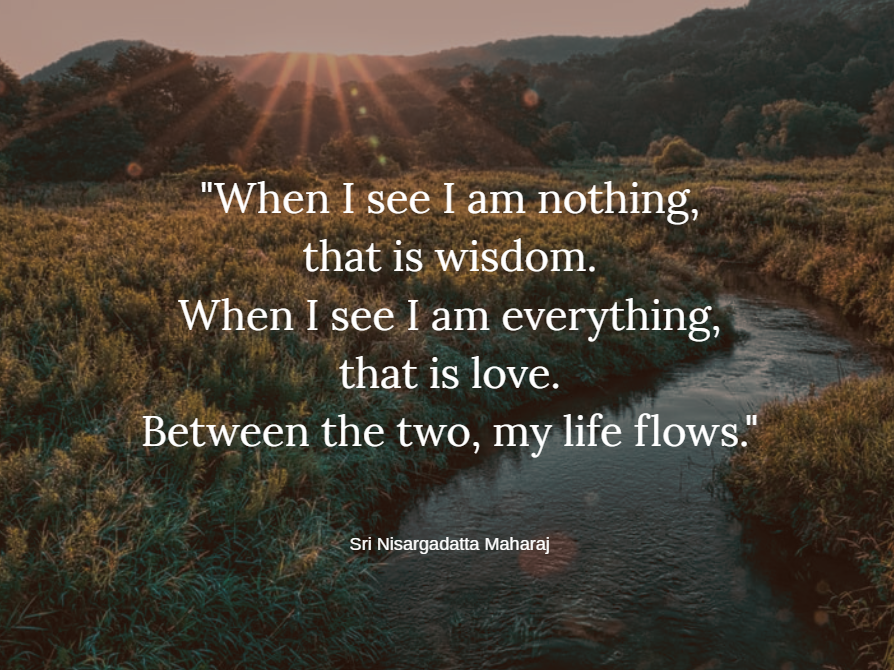
“When I see I am nothing, that is wisdom. When I see I am everything, that is love. Between the two, my life flows.”
Sri Nisargadatta Maharaj
Letting go and forgiveness: the key to lightness
He had let go of his resentment toward the past, set down the ego of a Deputy CEO to sit and share with me, heart open. That was releasing affliction, not releasing responsibility. He still cares for his children, still runs his company, but his mind no longer clings to old wounds.
Forgiveness, toward oneself and toward others, is an immense strength of the wise. It brings a peace no title can offer. A heart that knows how to forgive is like a vast sky: however many dark clouds gather, the sky remains the sky.
Designing your own journey “beyond happiness”
The story between us has no verdict on who is happier. It is only proof that happiness is deeply personal and worthy of reverence.
For him, happiness is the stillness after the storm, the rare experiences shared with the world’s great minds. For me, happiness is gratitude for what I already have – a family in harmony after years of scarcity.
We so often stand on one mountain longing for another, craving what others have while forgetting we are standing on a treasure of our own. True happiness lies in the ability to slow down, observe, and treasure.
I believe it’s the same for you. Each morning, instead of dwelling on what you haven’t achieved, list what you already have: one healthy breath, a roof to return to, someone to love, or simply a good cup of coffee. Treasure it, be grateful for it, and you’ll find you are living a life “beyond happiness.”
If you don’t yet feel that way, then today is the best time to begin designing a new, shimmering journey – not by earning much more money, but by cultivating in your soul a lens of gratitude. As Marcus Aurelius said: “The happiness of your life depends upon the quality of your thoughts.”
Live a life that is intensely vivid, but never forget to keep a heart that knows when it has enough. That is the state “beyond happiness” we all have the right to own.
One handwritten question every morning. Thirty minutes of financial study every day. One page of a book every night. Nothing remarkable about any single action.